
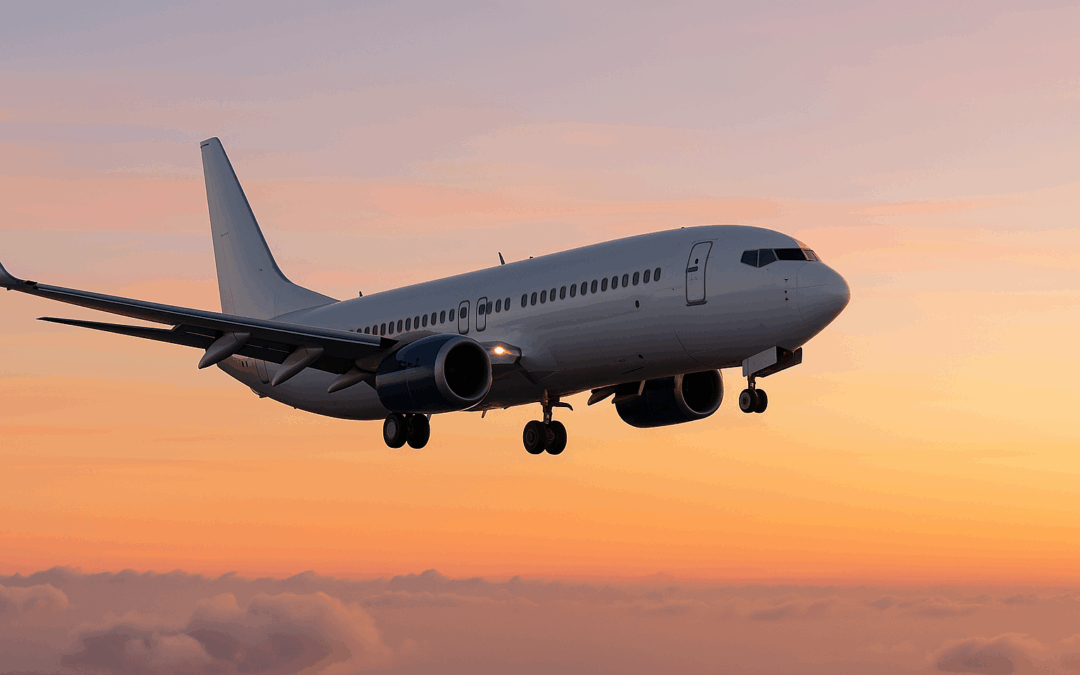
British travellers heading to America are often surprised at how common in-flight Wi-Fi is on domestic routes. While in Europe you can’t get online with carriers like Ryanair or even British Airways on most short-haul flights, in the U.S. nearly every big airline offers a connection in the air. Prices and performance vary, though, so here’s what you should expect before you book your seat.
American Airlines
- Wi-Fi is fitted to most U.S. domestic aircraft.
- Day passes are typically around USD $10.
- Longer-term subscriptions are available if you fly often.
- Connection quality varies by aircraft because different providers are used (mainly Viasat and Gogo).
Delta Air Lines
- Delta is rolling out free Wi-Fi on most domestic services.
- On routes where it’s not yet free, passes are about USD $5–7.
- Speeds usually 10–15 Mbps, good enough for social media, email, and video calls.
- Free messaging (WhatsApp, iMessage, Messenger) works across the fleet.
United Airlines
- Wi-Fi is offered on most domestic flights for USD $10, or USD $8 if you’re a MileagePlus member.
- Monthly plans are available if you take several trips.
- United has begun installing Starlink satellite Wi-Fi. Early tests show speeds of 40–200 Mbps, closer to what you’d see at home.
Southwest Airlines
- Simple flat fee of USD $8 per flight, no matter the distance.
- Free messaging included.
- Average speeds around 8–10 Mbps, which is fine for browsing, email, and standard streaming.
JetBlue Airways
- JetBlue offers Fly-Fi free of charge to all passengers.
- Speeds 10–15 Mbps, often enough to stream and video call.
- As it’s free, performance can dip on busy flights, but still ahead of most rivals.
Alaska Airlines
- Wi-Fi costs USD $8 per flight.
- Free messaging included.
- On larger aircraft (like the 737) the connection can handle streaming. On smaller regional planes, expect only basic browsing speeds.
Hawaiian Airlines
- Hawaiian has partnered with Starlink to roll out free satellite Wi-Fi across its long-haul and domestic services.
- Performance is among the best in the industry, with low latency and strong speeds.
Why This Matters for UK Travellers
In Europe, short-haul flights rarely provide any Wi-Fi at all. British Airways has Wi-Fi on some long-haul aircraft but not consistently on European routes, and Ryanair does not offer it at all. By comparison, even budget U.S. airlines usually provide at least basic connectivity. For UK visitors used to being offline for two hours on a hop to Spain, it’s a very different experience when flying between American cities.
What You Can Do in the Air
- Messaging and browsing: Reliable across all airlines.
- Streaming: Works well on JetBlue, Delta, and Starlink-equipped United or Hawaiian flights.
- Video calls: Feasible on faster connections, but still hit-and-miss with older systems.
- Downloads: Best to do these before flying unless you’re certain of a Starlink service.
Travel Tips for British Flyers
- Check availability: Not every aircraft in the fleet may have the same Wi-Fi provider.
- Budget for it: Most paid passes are USD $8–10 per flight. Or just get our USA SIM/eSIM which includes free Wi-Fi on Alaska, American, Delta, and United, for a limited time.
- Plan ahead: Download Netflix, Spotify, or work files before boarding.
- Subscriptions: Worth considering if you’ll be flying multiple domestic segments during a trip.
- Expect differences: Even when labelled “Wi-Fi available,” performance can swing widely between flights.
Bottom line
For British travellers, U.S. domestic airlines are ahead of Europe when it comes to in-flight connectivity. Whether it’s Delta and JetBlue offering free Wi-Fi, or United rolling out high-speed Starlink, you’ll likely be able to stay online during most flights. Just remember to factor in the extra cost if you’re on carriers that still charge.